

JULIETTE MINCHIN: WHERE THE RIVER BURNS
Juliette Minchin engages with the layered history of this 16th-century landmark with new works rooted in its architecture, symbolism and enduring traditions.
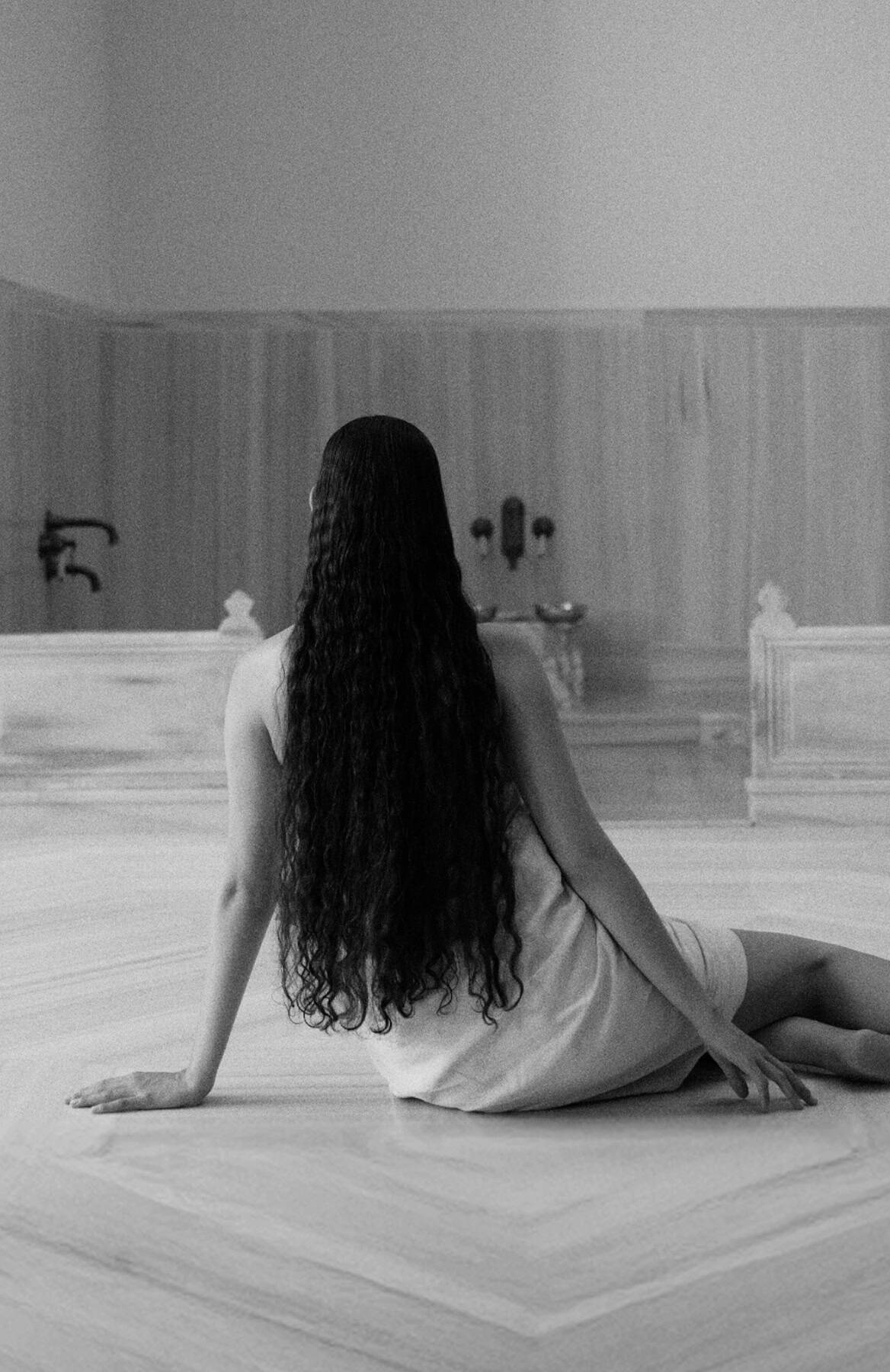
The hammam has long been imagined as a site of purification and rebirth. At its center lies the ‘navel stone,’ recalling the omphalos stone at Delphi, the Greek word for ‘navel.’ Delphi, the foremost oracular sanctuary of the ancient world, was regarded as the center of the Earth, a place where water served as a medium for both prophecy and purification. Through works in wax, tin, and paper shaped by fire and water, Minchin transforms the cistern into an oracle’s shrine – where rituals of desire, care, and devotion trace connections between the body and the cosmos.
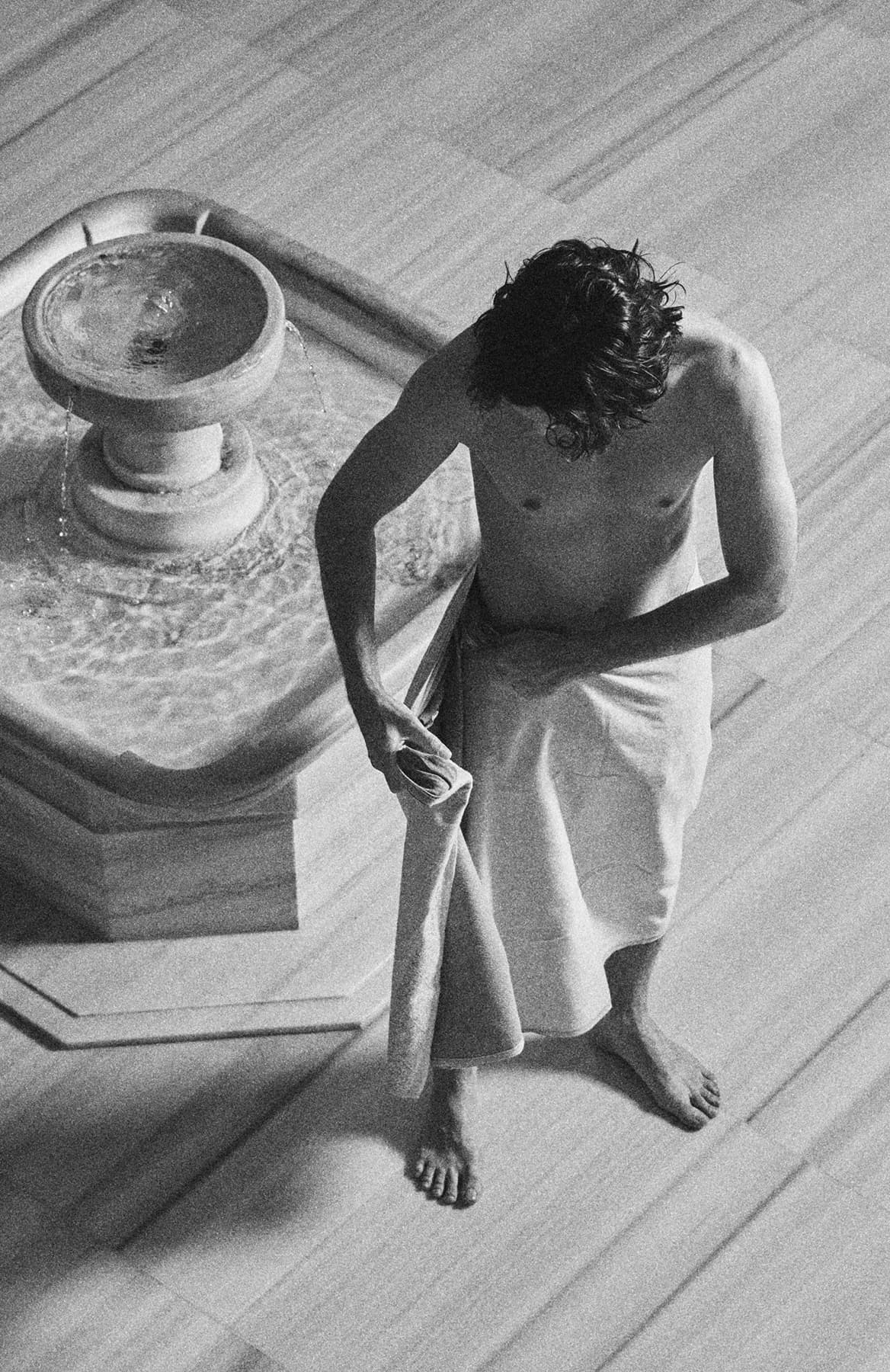
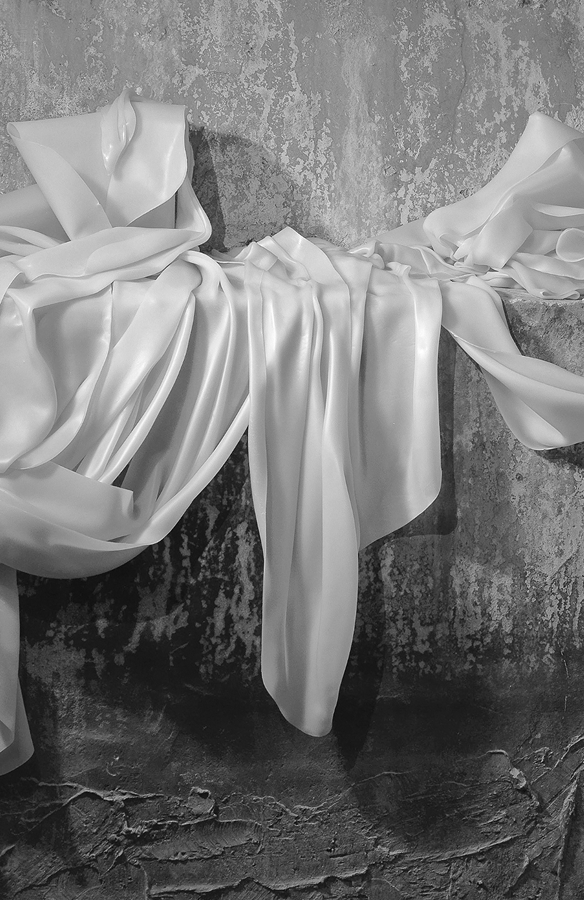
In the entrance of the cistern, Minchin’s signature draperies evoke a moment of release and disrobing before stepping into a sanctuary such as the hammam, where outer layers and identities are shed. In her hands, the wax becomes both skin and shell: pliable, protective, porous, enveloping the architecture as living, melting flesh.
The in-situ wax works are interspersed with drawings from Minchin’s Hydromancies series, referring to divination by the appearance or motion of liquids such as water. Using graphite powder, burnt wood and pigments, they are created through an interplay of water and fire, echoing the elemental forces of the hammam. Resembling sacred parchments, these wax-dipped works call forth cosmic fragments, nebulae that are both cradles and sepulchers of stars.
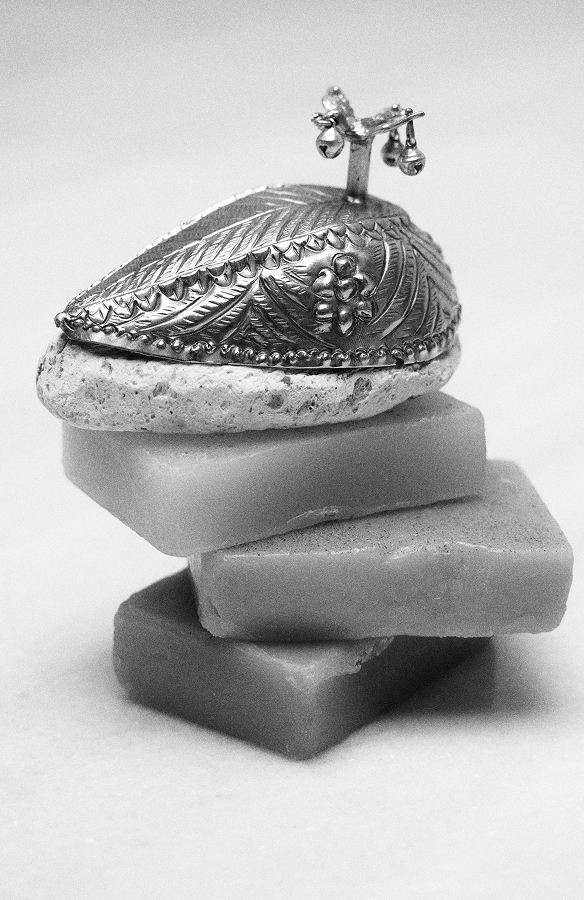
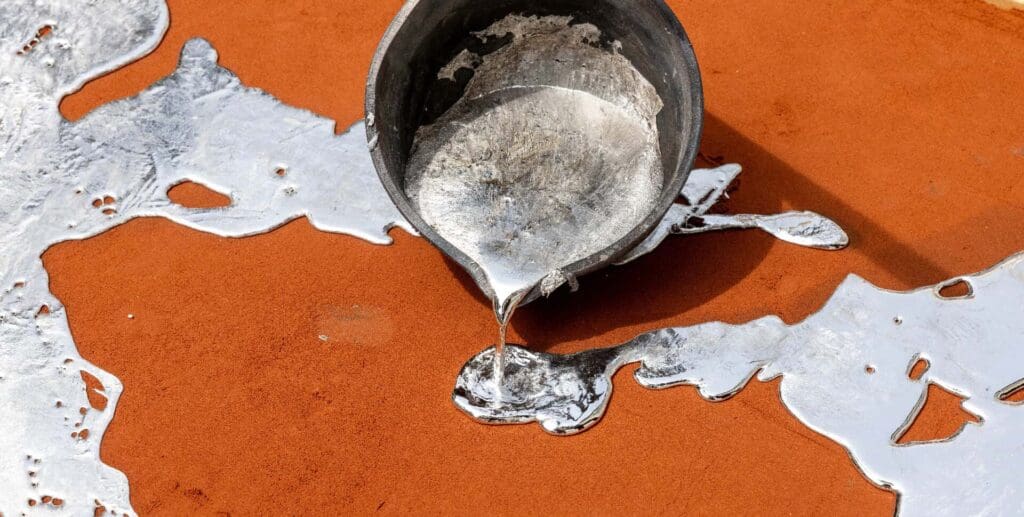
Minchin also draws from the ancient practice of molybdomancy – casting molten metal for divination – with a series of tin installations made on-site. In the otherworldly chambers below, tin seeps into cracks and solidifies into lace-like, reflective forms – evoking sacred rivers, ancient relics, and omens traced in molten matter. Another series, created by repeatedly casting tin into hammam bowls, forms a constellation of metallic vestiges that appear excavated from the site itself. Like votive offerings, they are containers of water’s memory, holding what is lost, and what endures.
Inspired by Istanbul’s devotional gestures, Minchin also incorporates half-burnt candles gathered from local churches. Once lit in hope, these remnants are transformed into a sculptural vessel for longing, memory, and spiritual residue.
As the final act of the exhibition, Juliette Minchin presents Omphalos, an ephemeral installation in the garden overlooking the domes of the Zeyrek Çinili Hamam. This installation of wax drapes on a metal structure creates an imaginary sanctuary with a cupola. Over time, the wax will melt and the metal will oxidize, embodying the transience of life.
Where the River Burns weaves together universal rites of spirituality, turning the hammam into a site where matter becomes metaphor, and the river of ritual begins to burn. The exhibition is open daily, except on Mondays, from 10:00 to 18:00, and runs until January 18, 2026. Admission is free.
This exhibition is the fourth project to take place within Zeyrek Çinili Hamam’s contemporary art program initiated by Koza Yazgan and curated by Anlam de Coster, which seeks to preserve the social role historically carried by hammams as places of gathering, healing, and belonging through free exhibitions and public programs.
*Two works by Juliette Minchin are nestled within the hammam’s cold rooms in both the men’s and women’s sections, revealing themselves only to visitors who partake in the bathing ritual. Guided tours will be offered throughout the duration of the exhibition to explore the cold rooms.


