



Portrait of Barbaros Hayreddin Pasha, Nakkaş Nigârî, (1494–1572), Topkapı Palace Museum Library, H.2134, y.9a.
HISTORY
The Hamam Across Centuries

The Hamam
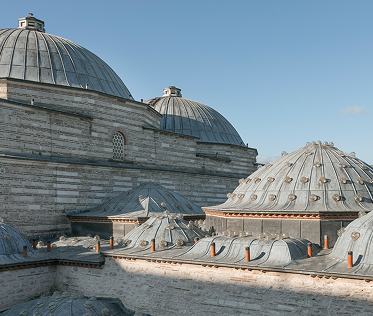
Zeyrek Çinili Hamam stands on a site shaped by different civilizations and centuries of use. The structure seen today was built in the 16th century and designed by Mimar Sinan. Across time the building has been used, altered, damaged, abandoned, and restored.
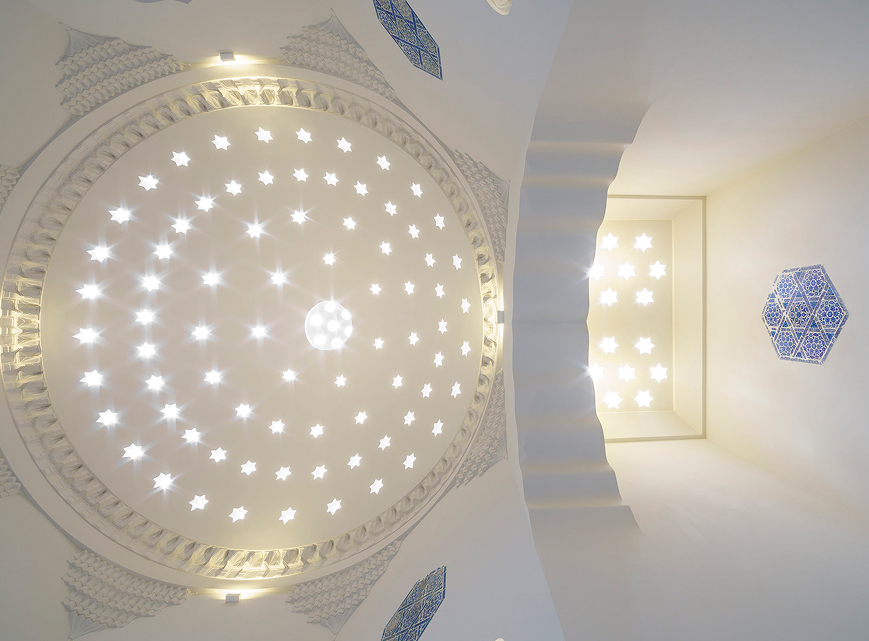
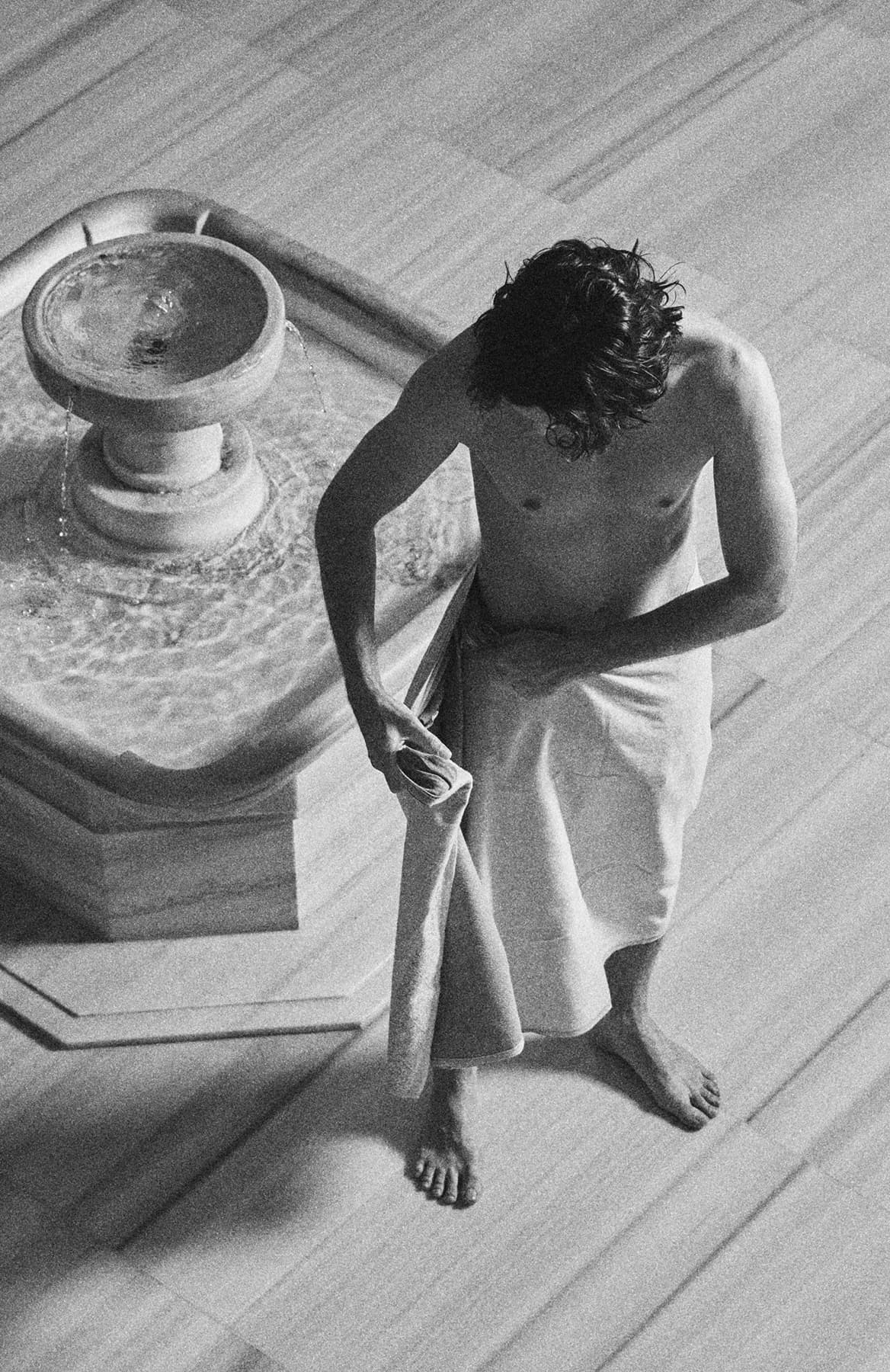
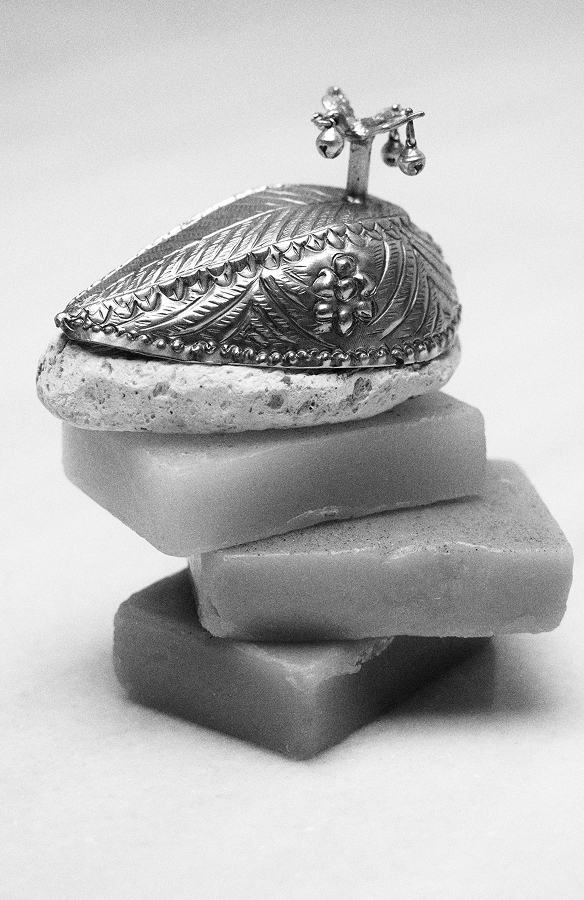
Its history is cumulative. The hammam was both a place of bathing and a place of gathering. Celebrations related to weddings, births, and various social milestones passed through these walls, and bathing objects such as wash basins and clogs still carry traces of those moments.
The hammam reflects the layered history of Istanbul itself, where Byzantine foundations and Ottoman architecture continue to coexist.
The Cistern
During the restoration of the hammam, an earlier layer of the site emerged: a series of Byzantine cisterns predating the Ottoman bath by centuries. When the hammam was built in the 16th century Mimar Sinan incorporated these underground reservoirs into the structure, using them as foundations to help protect against earthquakes.
Their walls carry delicate graffiti with incised drawings of galleys and sailing vessels, whose makers and dates remain unknown. Part of the vast water system that once sustained Constantinople, these cisterns supplied the surrounding district and the nearby Pantokrator Monastery.
Hidden beneath the marble halls, they reveal a deeper layer of the site, shaped by water, engineering, and the city’s layered past.


Historical Timeline
1500s
Building the Hammam
Between 1530 and 1540, Barbaros Hayreddin Pasha, Grand Admiral of the Ottoman Navy, commissioned a double hammam in Zeyrek during the reign of Sultan Süleyman the Magnificent. Built to support his charitable foundation, the project was entrusted to Mimar Sinan, chief imperial architect of the Ottoman Empire. The building followed a clear spatial order designed around the bathing experience. Much of the interior was lined with blue and white İznik tiles produced specifically for the structure, forming one of the most extensive decorative programs in an Ottoman hammam

1600s
Hammams of Zeyrek
By the 1600s, Zeyrek had become a predominantly Muslim residential district and an area with several hammams. This period marked the height of public bath culture in the city. Zeyrek Çinili Hamam functioned as a double hammam serving the surrounding neighborhood. It was also known as the Nakkaşlar Hammam, a name likely referring to the nakkaşlar –decorators and artisans– who frequented the hammam.

1700s
Fires and Earthquakes
From the 1700s onward, fires and earthquakes reshaped many parts of Istanbul. During this period, Zeyrek Çinili Hamam was repurposed for a short time, to be used as military stables.

The Great Fire of Constantinople, 1581, miniature from Codice Cicogna akg-images/Cameraphoto, AKG296738
1800s
Private Ownership and Intervention
In the 1800s, the hammam passed from foundation ownership into private hands for the first time. Ali Bey, its first private owner, carried out restoration works between 1833 and 1850. Later owners continued to modify the building to meet changing needs. These interventions preserved the structure while altering its interior character.

Cold room of Çinili Hamam, engraving, Charles White, Three Years in Constantinople, c. 3, Henry Colburn, London, 1846.
1800s
Dispersal of the Tiles
In the 19th century, many of the tiles were removed from the hammam and sold through the European antique market. As a result, the interior’s decorative scheme was gradually dismantled. Today, many of these tiles are held in major museum collections, including the Victoria and Albert Museum, the Louvre Museum, and the Ashmolean Museum.

1900s
World Heritage Status
In 1985, the Zeyrek district was added to the UNESCO World Heritage List as part of the Historic Areas of Istanbul. The listing acknowledged the importance of the neighborhood and placed the building within a protected area.

2000s
Rediscovery and Restoration
Following its acquisition by The Marmara Group, a thirteen-year preservation and restoration project began in 2010. Architectural restoration was carried out alongside archaeological research. Excavations revealed the Byzantine cistern, tile fragments, and traces of earlier construction phases. Restoration focused on exposing the building’s layered history while also introducing seismic strengthening to secure the structure for the future.

Çinili Hamam from the west, 1969 German Archaeological Institute, D-DAI-IST-R2838 © W. Schiele
2023
The Hammam Today
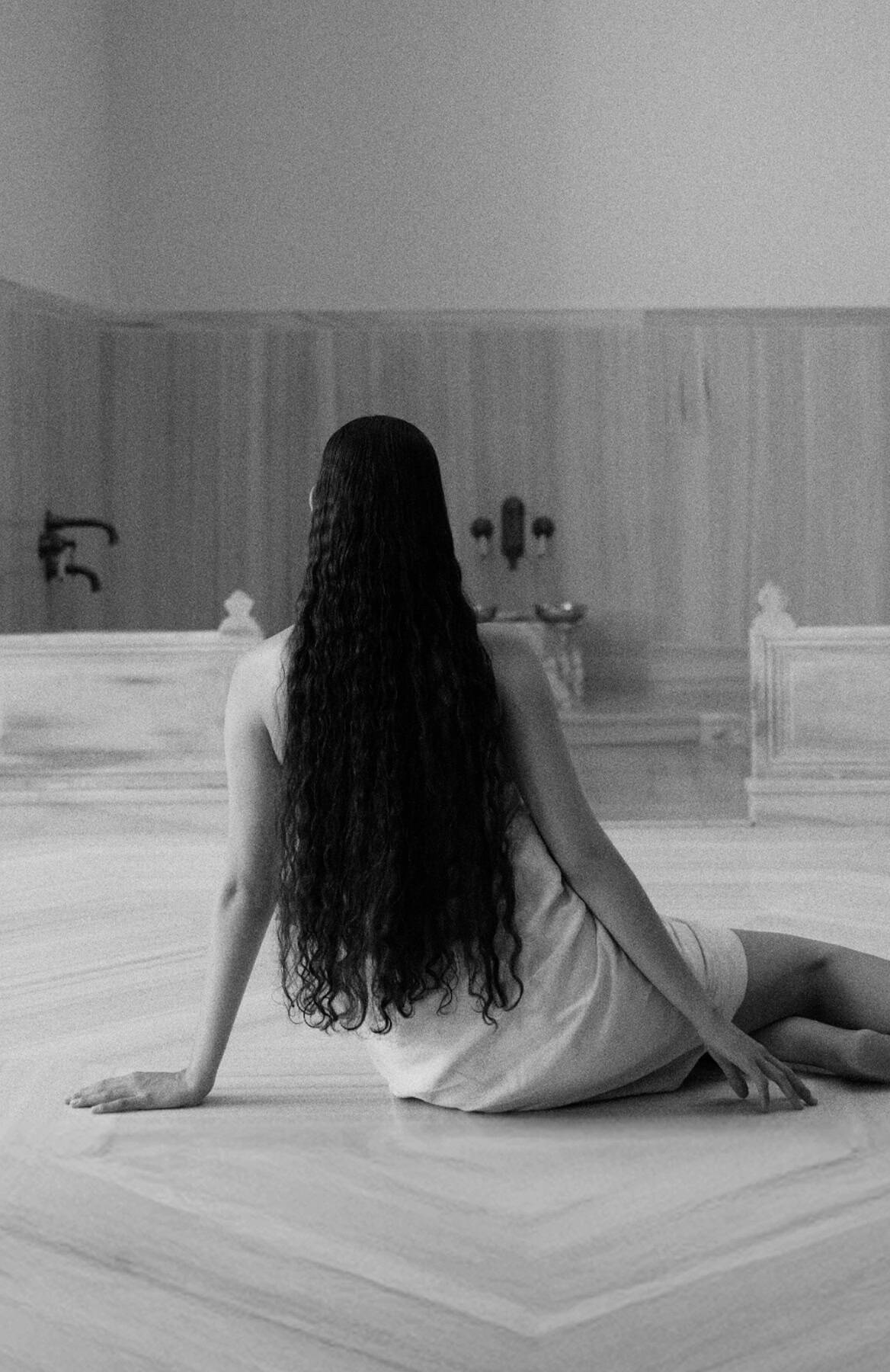
Zeyrek Çinili Hamam reopened in 2023 following an extensive restoration. Today, the historic bath continues to operate as a working hammam, while a museum created after the unexpected discovery of nearly 3,000 tile fragments presents the building’s archaeological finds and donated objects related to bathing culture. The Byzantine cistern now hosts an ongoing program of site-specific contemporary art exhibitions, inviting artists to spend time in Istanbul and create works in dialogue with the history and architecture of the space.

The main iwan and private hot chambers in the men’s section of Zeyrek Çinili Hamam before restoration © Sıtkı Kösemen © Murat Germen