ALEX ČERVENÝ — “ATLAS OF ENCOUNTERS”
Zeyrek Çinili Hamam presents “Atlas of Encounters”, Brazilian artist Alex Červený's first solo exhibition in Türkiye. Curated by Anlam de Coster, the exhibition brings together over 30 works mapping connections between astronomy, architecture, and the body.
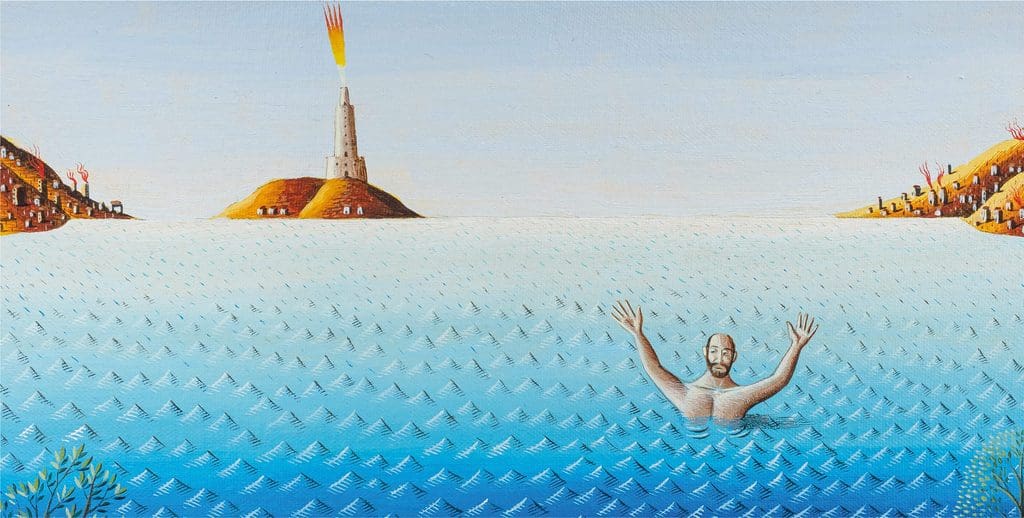
Zeyrek Çinili Hamam presents “Atlas of Encounters”, Brazilian artist Alex Červený’s first solo exhibition in Türkiye. Curated by Anlam de Coster, the exhibition brings together over 30 works mapping connections between astronomy, architecture, and the body. Set in the Byzantine cistern beneath the 16th-century hammam, the exhibition includes newly commissioned works alongside pieces created after the artist’s first visit to Istanbul over 15 years ago, shown publicly for the first time.
The works conceived in response to the hammam’s cistern include interventions on historical manuscripts and engravings, paintings on canvas, embroideries on traditional towels, and parchment sculptures, articulated across the space like a codex. De Coster describes the subterranean cistern as the “hammam’s subconscious”: a concealed space beneath the building whose layered histories resonate with Červený’s exploration of memory, allegory, and the permeable boundary between the conscious and the unconscious.
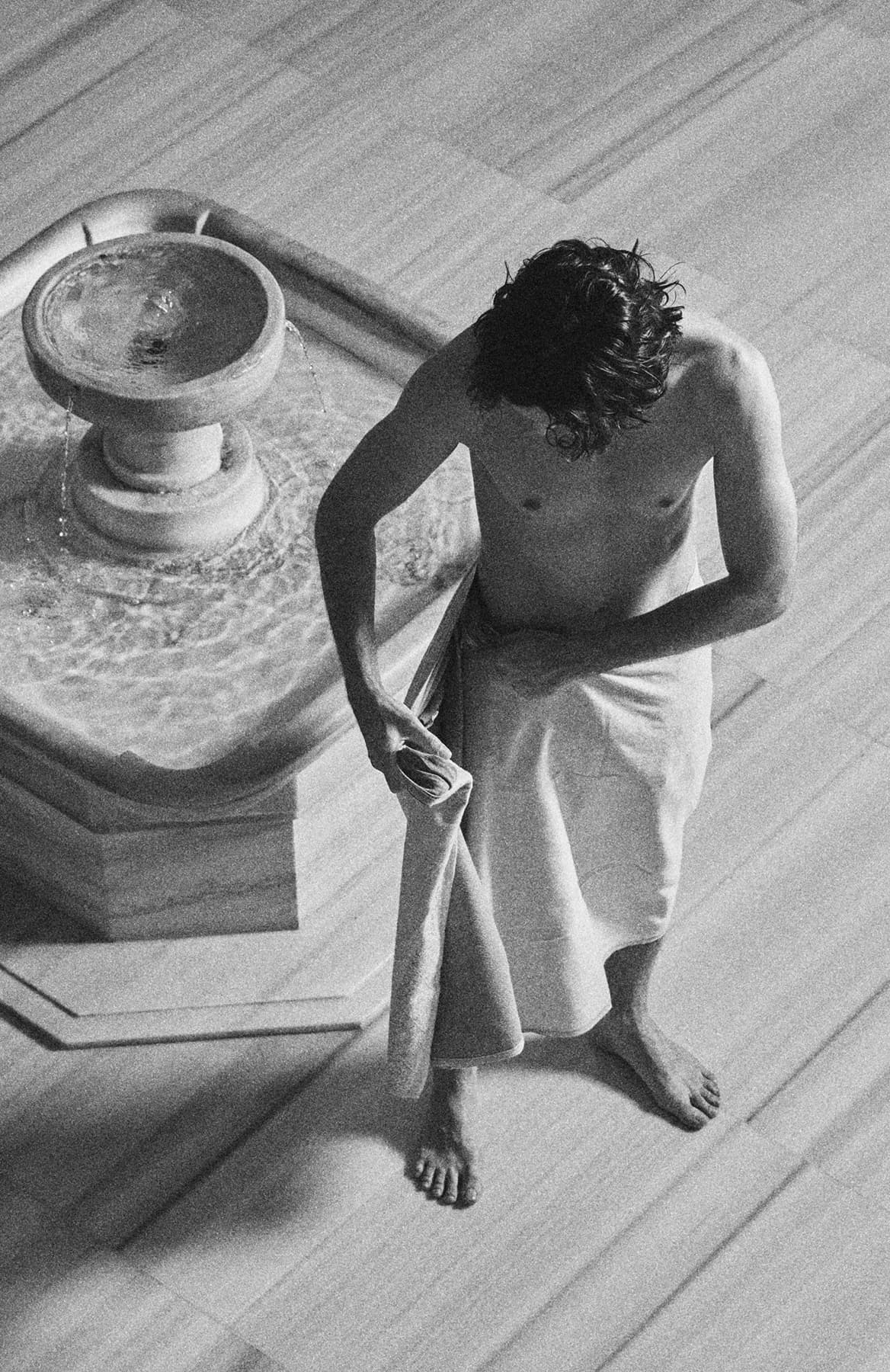
The hammam also speaks to another central concern of Červený’s practice: the relationship between body and mind. Its historical and aesthetic weight, together with the unexpected presence of the Byzantine cistern, makes it, in the artist’s words, “an ideal space to house my reflections.”
A major new work is Červený’s intervention on a facsimile of a majestic engraving of Istanbul by Dutch artist and traveler Cornelis de Bruijn (c. 1652–1727), after an original copy of the book from the artist’s own collection.
The “Astronomy Notebook” series constitutes another central body of work in the exhibition. It began when Červený found pages from two Ottoman astronomy compendia in an Istanbul vintage bookshop in 2009. This series, which serves as the core of “Atlas of Encounters”, was created during his stay in Pera, directly intervening on the book’s pages containing Ottoman Turkish and Persian scientific texts. Červený layered new constellations of images over diagrams and fragments of writing, using the pages as supports for palimpsests.
Červený approaches historical materials as porous structures, capable of holding multiple systems of knowledge at once—true encounters between different orders of seeing and knowing. Astronomical diagrams, manuscript traces, and cityscape records are transformed into new visual constellations, sustaining a rare harmony between the autobiographical and the universal: private memory in conjunction with systems designed to describe the world.
The exhibition also establishes a dialogue between Červený’s practice and the site’s material and symbolic legacy. Commissioned by Barbaros Hayreddin Pasha, Grand Admiral of the Ottoman Navy, and designed by the imperial architect Mimar Sinan, the edifice belongs to a world in which astronomy shaped both navigation and structures of power. The recently uncovered ship graffiti etched into the walls of the cistern, attributed to the galley slaves of Barbarossa, generate their own mythology.
Alex Červený’s palimpsests echo this logic of inscription: images layered onto historical supports, where meaning remains suspended between knowledge, memory, and speculation. His interventions resonate as acts of orientation: readings of the sky, the city, and the archive through a shared visual language.
Alex Červený (b. 1963, São Paulo) is internationally recognized for his singular practice that fuses history, mythology, literature, and autobiography into richly imagined visual worlds. His work has been presented at major institutions including Fondation Cartier pour l’Art Contemporain, Gwangju Biennial, Pinacoteca de São Paulo, and Moderna Museet in Stockholm.
“Atlas of Encounters” is the sixth project presented as part of Zeyrek Çinili Hamam’s contemporary art program, initiated by Koza Güreli Yazgan and curated by Anlam de Coster. Building on the hammam’s historical role as a social space for healing, belonging, and gathering, the program seeks to carry this legacy into the present through exhibitions and events that are free and open to all.
“Atlas of Encounters” is on view at Zeyrek Çinili Hamam until January 31, 2027, every day except Monday, from 10 am to 6 pm. Admission is free.


